
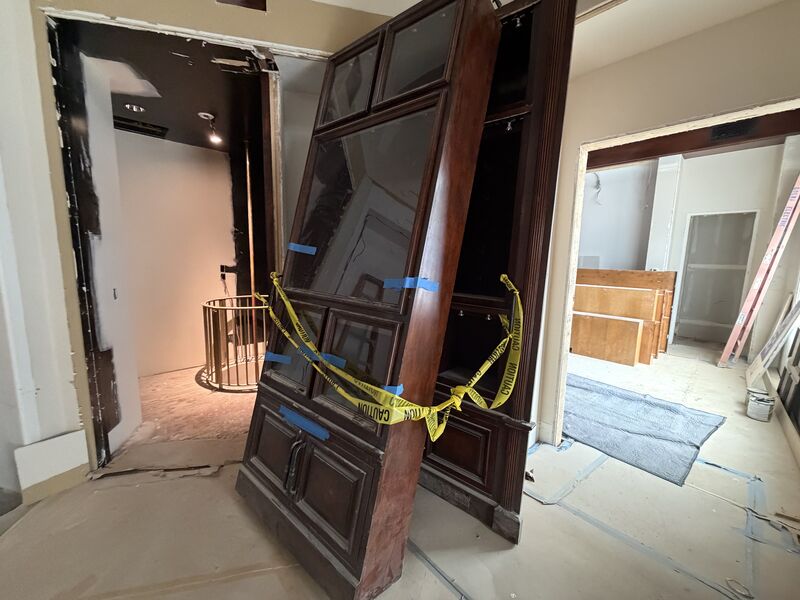
When a homeowner donates cabinets, doors, flooring, or fixtures out of a house, the value on Form 8283 is the value of those specific components, in place, as of the date of the gift. In a well prepared donation appraisal, that conclusion stands apart from the value of the property as a whole.
Donors ask me about this constantly, and so do some of their CPAs: why does the appraisal show one large number and the tax form a much smaller one?
What is actually being donated
In a building component donation, often called a deconstruction donation or tax salvage, the owner keeps the land and the house. A deconstruction crew removes a set of installed components ahead of a remodel or teardown and delivers them to a qualified reuse organization. The organization receives the cabinetry, doors, millwork, and fixtures, and the owner keeps everything else.
The appraisal answers a narrower question than a typical residential appraisal: what were these particular components worth, as they existed in the home, on the date the owner gave them?
Two values, two jobs
The whole property value. When I develop a value for the property as a whole, that number is context. It shows the market the home sits in and serves as a reasonableness check on the component conclusion. A component value that is a large share of the whole property value deserves scrutiny. This number stays off Form 8283.
The donated component value. This is the conclusion that flows to Form 8283, Section B. It covers only the items identified in the appraisal and acknowledged by the donee organization.
Crossing the two is the error to avoid. Reporting the whole property value, or any number that includes components the owner kept, overstates the gift. Describing the donated items one way in the appraisal and another way on the donee’s acknowledgment invites questions about what the owner actually gave.
How I develop the component value
I start by identifying every donated component and photographing it in place before removal, with quantity, quality, and condition documented. I estimate cost new from nationally published construction cost data indexed to the effective date, then apply physical and functional depreciation at the component level. That depreciation runs heavier than depreciation on the improvements as a whole, because cabinets and doors wear and date faster than the structure around them. On a recent assignment, component depreciation was 30 percent physical and 15 percent functional, against 10 percent and 5 percent for the improvements overall. I then test the result against local market evidence and reconcile it into a single value for the donated items.
When the same property produces donations in more than one year, I apply the same method from report to report. A donor whose 2025 and 2026 appraisals use different methods for the same house has handed the IRS an easy question.
An example
On a recent Paradise Valley assignment, the owner donated interior wood doors and built-in den casework ahead of a renovation. The home is a multimillion dollar custom residence. The donated doors and casework were a small fraction of that, and that fraction, supported by component level cost and depreciation analysis, went on Form 8283.
What a CPA should check before the return is filed
The Form 8283 value matches the donated component conclusion in the appraisal, not the whole property value.
The items described in the appraisal match the items the donee organization acknowledged receiving.
The appraiser signed the appraisal no earlier than 60 days before the date of the contribution, and the donor received it before the return’s due date, including extensions.
The qualified appraiser signed the appraiser declaration on Form 8283, Section B, and the donee signed its acknowledgment.
If the claimed value exceeds $500,000, the appraisal itself is attached to the return.
If the property produced donations in prior years, the methods are consistent across reports.
When to bring in the appraiser
Before the crew removes anything. The appraisal depends on documenting the components in place, and once cabinets and doors are pulled and hauled away, that evidence is much harder to establish. The best time to call is while the deconstruction contract is being negotiated.
For more on these assignments, see IRS Qualified Appraisals for Tax Salvage and Charitable Donations. CPAs and planners may also find Appraisals for Financial Planners, CPAs, and Trustees useful.
About the author
Andrew Ament, Arizona Certified Residential Appraiser #21472, has appraised residential property across Maricopa and Pinal Counties since 2005 and prepares IRS qualified appraisals for building component donations, including multiple-year donations from luxury properties. He is a member of Build Reuse. Call 480.540.5151 or email andrew@censeovc.com.
Censeo Valuation Consultants does not provide tax or legal advice. Donors should consult their CPA or attorney regarding deductibility and tax reporting.